




 191 / 239

190
314
MORSE
, Samuel Finley Breese
Lettre autographe signée au marquis de Lafayette
New York, 6 janvier 1834
4 pp. in-4
TRÈS BELLE LETTRE DE SAMUEL MORSE AU GÉNÉRAL LAFAYETTE : IL PARLE
DU MUSICIEN ITALIEN PIETRO MARONCELLI, DES PRISONS DE SYLVIO PELLICO,
DE LEUR AMI FENNIMORE COOPER, ET DE LA POLITIQUE AMÉRICAINE.
LA LETTRE SE CLÔT SUR L’ÉLOGE DES PRINCIPES RÉPUBLICAINS ET DE LA
LIBERTÉ, DONT LAFAYETTE EST LE HÉROS, ET QUE SEULS LES ÉTATS-UNIS
PORTENT ENCORE : “YOU HAVE LIVED TO SEE YOUR FAVORITE PRINCIPLES
TRIUMPHANT IN ONE COUNTRY AT LEAST”
“Your obliging letter of the 5
th
Nov. just arrived finds me confined to the rouse by a temporary
lameness” ; il le remercie de lui avait présenté le “popular signor Maroncelli” qu’il a présenté à son
Club “which meets weekly and of which Mr Galladin, Mr Jay, Chancelleor Kent, the Professors of
Columbia College, are members” ; Morse parle de Sylvio Pellico et de son emprisonnement ; il
félicite Lafayette pour la guérison de son petit-fils Lasteyrie et pour l’entrée d’Oscar de Lafayette à
l’École Polytechnique “tell him, my dear General, that the world will have its eye on him, his name
cannot be hid, he must sustain it in all his glory” ; Morse annonce à Lafayette l’arrivée de Fennimore
Cooper “my excellent and distinguished friend (...) is about replying to the attacks made upon him
while absent and his pamphlet will make an exposé of the finance discussion in Paris” ; il lui annonce
l’envoi de plantes greffées et d’arbres qu’il lui fait envoyer en France et refuse de lui expliquer la
situation politique aux U.S.A. : “I cannot identify myself with either of the present parties but I am
rather a looker-on” suivent de beaux propos sur l’inanité des oppositions politiques, “Yet the solid,
substantial enterprising, active majority of the people are not moved by verbiage, or rhetorical
figure ; they read and calmy digest the arguments
pro
and
con
” ; il condamne une “absence of
religious principles and a prevalence of ignorance (...) No, my dear General, you have lived to see
your favorite principles triumphant in one country at least, they have withstood many a storm that
has threatened them ; they have been severely tried in the furnace, and are yet further to be tried,
but like gold seven times purified, they have hitherto come out, and I am persuaded will ever come
out, brighter and brighter (...) I have made a short extract from your letter for one of our Journals
and have also sent the extract from the
Precurseur
, relative to the
Société des droits de l’homme
”
Pietro Maroncelli (1795-1846) est un patriote, musicien et écrivain italien connu pour
avoir été le compagnon de prison de Silvio Pellico. En 1832, il s’exile en France où il
adhère au socialisme utopique de Charles Fourier. En 1833, il se rend à New York
sur invitation du librettiste de Mozart, Lorenzo Da Ponte, qui a fondé le premier opéra
d’Amérique. À New York, Maroncelli enseigne la musique et diffuse les idées socialistes
de Fourier. Dans les dernières années de sa vie, il a pour ami Edgar Allan Poe.
RÉFÉRENCE : les archives de Samuel F. B. Morse sont en grande partie conservées à la
Library
of Congress.
S’y trouve la lettre de Lafayette du 5 novembre 1833 à laquelle celle-ci fait réponse.
5 000 / 8 000
€
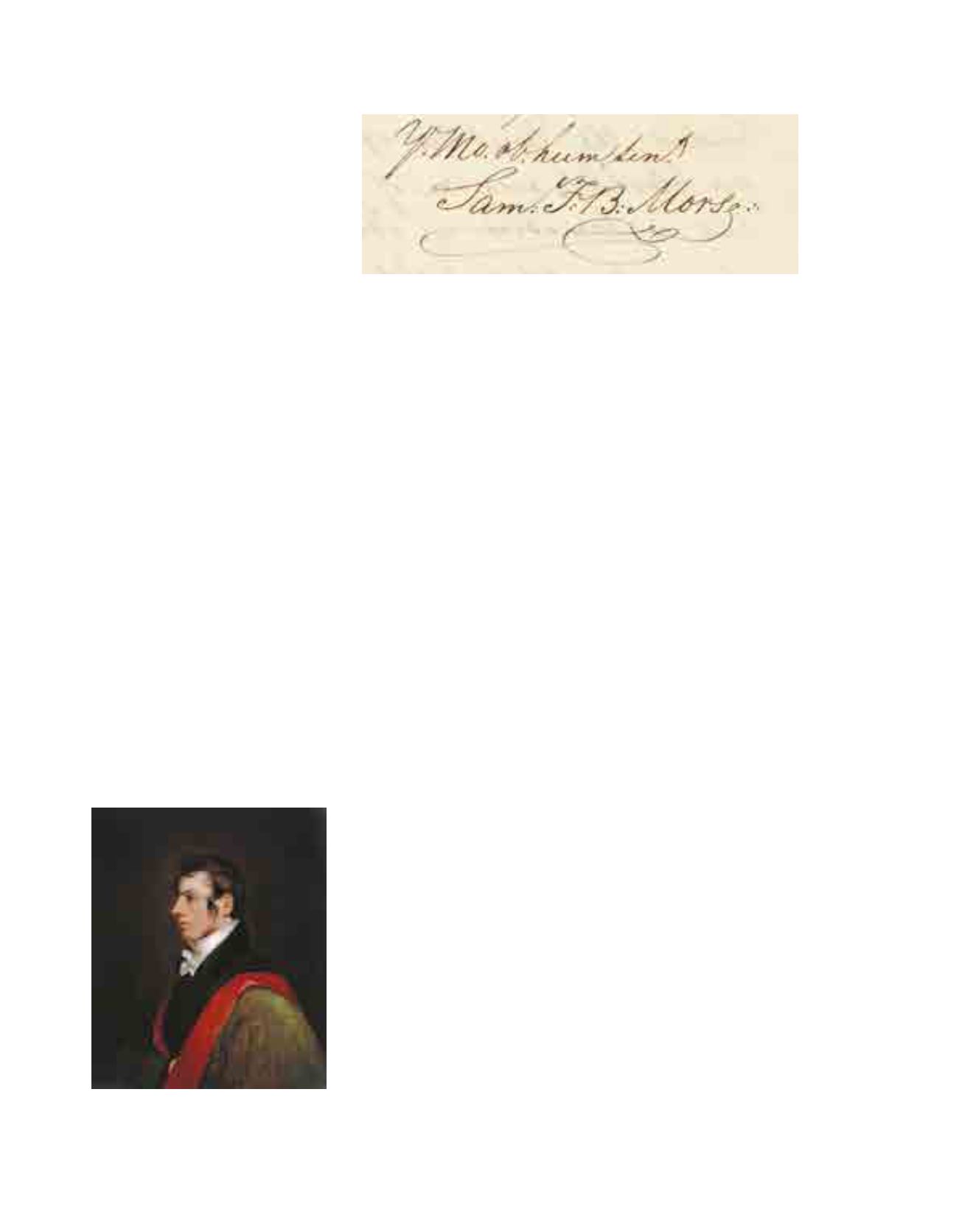
Self-portrait of Morse in 1812
(National Portrait Gallery)