




 40 / 178

120 – (Musique)
-
Ens. 1 ouvr. et 1 fasc.
-
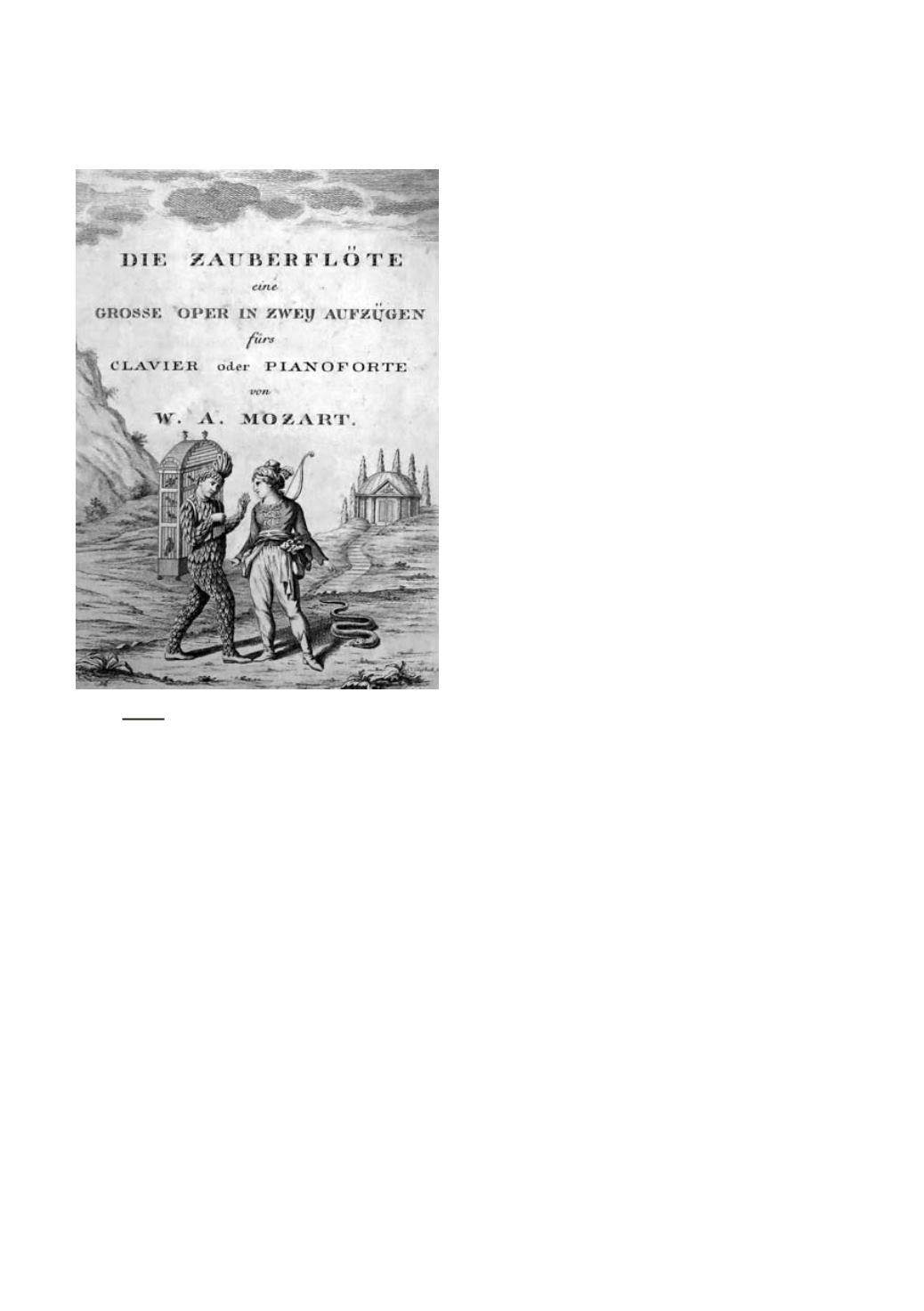
MOZART, Wolfgang Amadeus.- Die
Zauberflöte eine grosse Oper in zwey Aufzügen fürs Clavier oder Pianoforte.
Berlin, Amsterdam, J.J. Hummel, [1829 ?].
2 parts in 1 vol. in-4°: engraved title-64, engraved
title-64-[1] pp. (some pp. partly unbound, some foxing,
1 blank leaf between pp. 18-19, p. 40 in 2
d
part blank).
20
th
Century binding: half green calf, marbled paper
boards, flat spine (strongly used, upper board detached,
spine largely lacking, lacks of paper…).
Est.
:
200/ 250 €
Copy entirely engraved of this famous opera
given for the first time inVienna on 30
th
September
1791, composed of two parts containing
25 numbers in the first and 11 numbers in the
second but doesn't contain the Ouverture
which appeared as a single publication with the
engraving n° 901 in 1793 and is followed by a
register. Illustrated with 2 engraved titles by C.C.
Glasbach : the first, n° 842, figuring Papageno
and Tamino with the snake behind him, the
second, n° 846, figuring Pamina asleep and
Monostatos the Moor. A handwritten note joined
suggesting 1829 as the reprint date.
# Köchel, p. 712 ; # RISM M 4792.
▲ Provenance: Jules Peeters, Brussels (ex-
libris).
Joint
: Musica. [Revue]. Paris, 1906, n° 43, with the score of "The Magic flute" in supplement,
April 1906.— Various newspapers' cuts on Mozart and his opera.
¶ Réimpression (?) entièrement gravée, en 2 parties illustrées chacune d'un titre gravé (n° 842 et
n° 846). Demi-veau vert du 20e s. (fort usé, plat sup. dérelié, dos quasi manquant…).
121 – (Peinture)
-
PALOMINO de CASTRO y VELASCO, Antonio.- Histoire abrégée
des plus fameus peintres, sculpteurs et architectes espagnols [...]. Traduit de
l'espagnol.
Paris, Delaguette, 1749.
In-12°: [4]-389-[3] pp. (ex. lég. jauni, rousseurs, rares piqûres).
Rel. de l'époque: plein veau marbré, plats cernés d'un filet à froid, dos fleuronné doré à nerfs, tr. rouges (lég.
us., coins émoussés dont un fortement).
Est.
:
150/ 200 €
Édition originale de la traduction
de cet ouvrage (éd. orig.: 1724) du peintre et théoricien
de la peinture Palomino de Castro (1655-1726), surnommé le Vasari espagnol. Illustré d'un
bandeau historié.
▲ Provenance : "faisant partie du 1
er
prix du dessin de l'École C[ommuna]le à Bruxelles.
décerné au C[itoyen] Ch. Thomas. L'an 10 [1802]" (mention ms.).
Kunsten