




 32 / 201

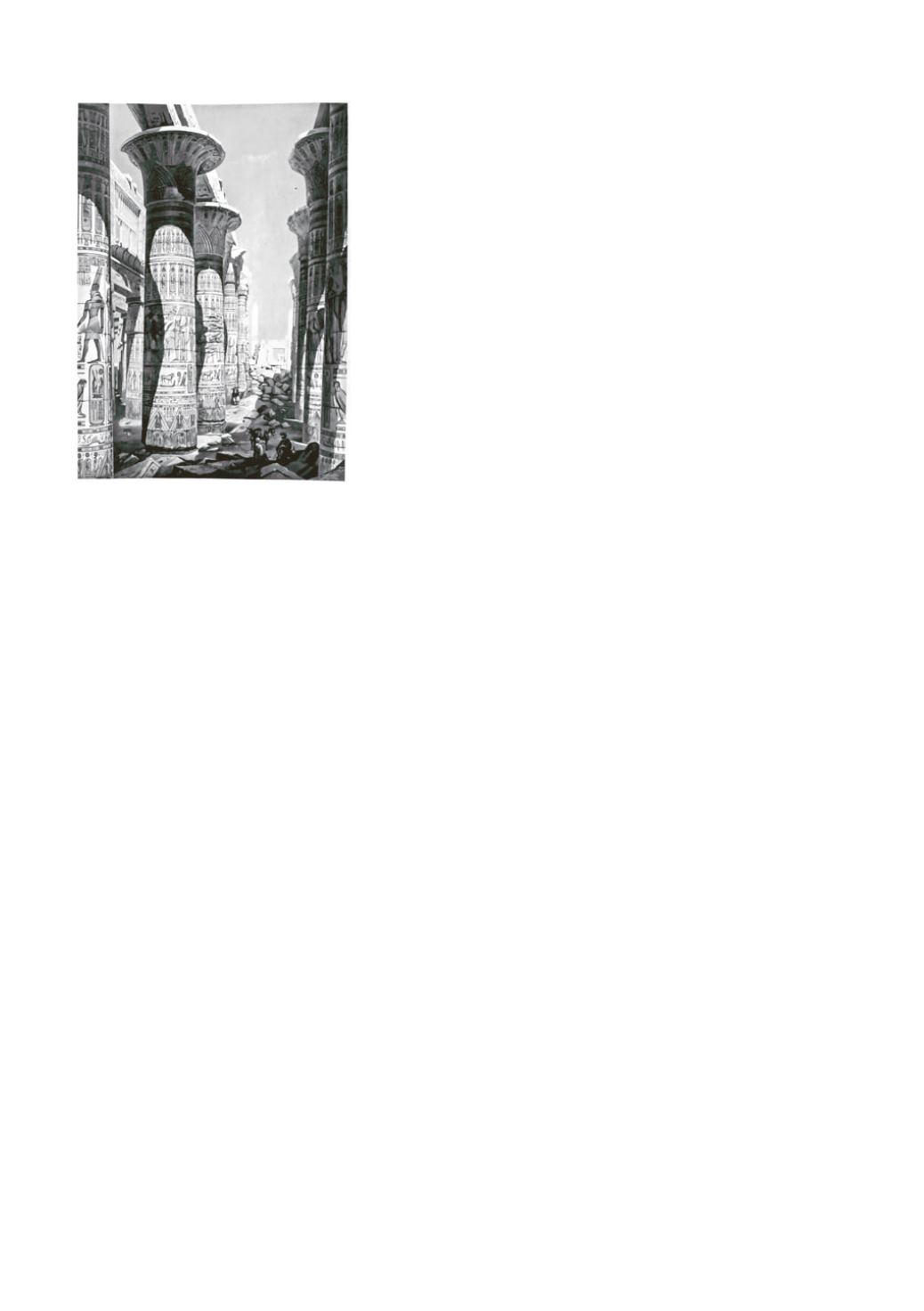
Egyptologie
lui par la photographie, Horeau participa à l'illustration du
"Voyage à Méroé" de Cailliaud et fit son propre voyage
en Égypte en 1837-1839 : après Alexandrie, il se rendit
au Caire, vit le site de Gizeh, loua un bateau pour Louxor
et remonta le Nil jusqu'à Abou Simbel. Pour réaliser les
magnifiques illustrations de l'ouvrage, il précise dans le
bulletin de souscription que "des dessins faits sur place et
de bienveillantes communications de vues daguerréotypées
m'ont permis d'apporter une grande exactitude dans la
reproduction des merveilles de la vallée du Nil". En effet,
il rencontra à Thèbes le photographe Gaspard-Pierre-
Gustave Joly auquel il commanda des daguerréotypes sur
base desquels il réalisera des dessins, en plus de ceux pris
sur place. En plus des grandes planches en bistre, l'ouvrage
est illustré de près de 120 vignettes sur bois dans le texte
explicatif dont une sur vélin teinté appliqué (f. 30 v°).
Paru en 12 livraisons et dédié à Eugène Lanchère de
Laglandière (1802-1833), l'ouvrage pouvait être souscrit
avec les planches peintes à l'aquarelle. Complet du
"Frontispice rétrospectif" et de la liste des souscripteurs, datée 1846, parmi lesquels le
roi Louis-Philippe, des libraires (Bellizard, Bossange, Carilian, Hachette, Renouard), des
voyageurs dont certains artistes (Giraud, Bouclier, Bourdon, Cherubini, Homaire de Hell,
Malicet, Morot, de Saint-Céran, le baron Taylor...), des architectes, des orientalistes, etc.
# Marie Grillot.-
http://egyptophile.blogspot.be/2014/08/hector-horeau-des-aquarelles-dun.html; #
http://visualiseur.bnf.fr/Visualiseur?Destination=Gallica&O=NUMM-103291 (bulletin de souscription); # pas dans Abbey.
● Un des livres qui contribua à faire connaître l'égyptologie, illustré de planches d'une
grande finesse empreintes de "réalisme rêveur".
59 – (Voyage & Exploration) -
HOSKINS, George Alexander.- Travels in Ethiopia,
above the second cataract of the Nile; exhibiting the state of that country, and its
various inhabitants, under the dominion of Mohammed Ali; and illustrating the
antiquities, arts, and history of the Ancient Kingdom of Meroe. With a map, and
ninety illustrations [...].
London, Longman, Rees, Orme, Brown, Green, & Longman (printed by A.
Spottiswoode), 1835.
In-4° : xix-[1]-367 pp.; 55 pl. (copy soiled, yellowed on the edges, some pp. and pl. partly detached, 2 pl.
totally unbound, foxing on some pp., numerous on the map, one fold reinforced on the map, rare marginal
tears, a few stains or marginal dampstains).
Publisher's binding : dark green cloth, upper board with gilt illustrations, flat spine with gilt title and illustration
(worn out, spine detached, joints partly split, small lacks, three corners strongly dulled, upper flyleaf partly
detached).
Est.
:
500/ 600 €
First edition
of this travel made in 1833 by the author with the artist Luchese Bandoni
in Nubia and Northern Sudan, in "the land whence the arts and learning of Egypt, and
ultimately of Greece and Rome, derived their origin. In this remarkable country we behold
the earliest efforts of human science and ingenuity" (cfr p. v). Illustrated by Charles Joseph
Hullmandel after Hoskins and Bandoni with numerous illustrations in the text and with
56 engravings on 55 leaves (8 double-pages) : 1 folding map and 55 lithographies of which
4 chromolithos and 2 hand-coloured. Hoskins (1802-1863) was one of the first to venture
above the second cataract and the first European to describe and illustrate the antiquities
of Meroe.
# Blackmer 695.
▲ Provenance : Alexandre Varille (1909-1951), egyptologist (ex-libris).