




 64 / 239

63
One of the signatories is Commodore
Isaac Hull, famous as the captain of
the USS Constitution, “Old Ironsides”,
during the War of 1812. Sharing in their
toasts on board the United States was
“His Excellency General Bolivar and
suite”, the Liberator himself proposing
a toast to his fellow liberator, Lafayette
(lot 223). On a less exalted – albeit
no less intriguing - level is a humble
commercial letter signed “Bakewell
Page & Bakewell” in which Lafayette is
presented with “a small token of the deep
sense we entertain, in common with our
fellow Citizens, of the obligations we owe
to your generous valour” (lot 239). This
small token took the form of two glass
vases made by Bakewell’s of Pittsburgh,
one engraved with a view of Lafayette’s
chateau, La Grange, the other with the
American Eagle. Bakewell’s was the
company which, that same year, took
out a patent for what was in effect the
world’s first method of mass-producing
glassware. And as a pendant to this
particular story, one might note that one
of the vases that accompanied this letter
recently was sold over over $250,000 at
auction.
In his letter inviting Lafayette to Michigan,
the explorer Lewis Cass highlights one
extraordinary quality that pervades
these papers, the sense that this was
one of those very few times in history
when history itself was revisited, a sense
almost of resurrection. Lafayette is hailed
as “the only Surviving Major General of
the revolutionary army among us”, and
told that he lives “in the midst of posterity
(…) you hear the judgment of history
upon your life and actions”. This archive
provides us not only with an extraordinary
snapshot of young America as it was in
1824-1825, of its own view of its glorious
past and burgeoning future, but in its
mingling of the humble and the grand,
the well-known and obscure, it could
be said to carry an emotional weight,
a fascination, possessed by few other
archives.
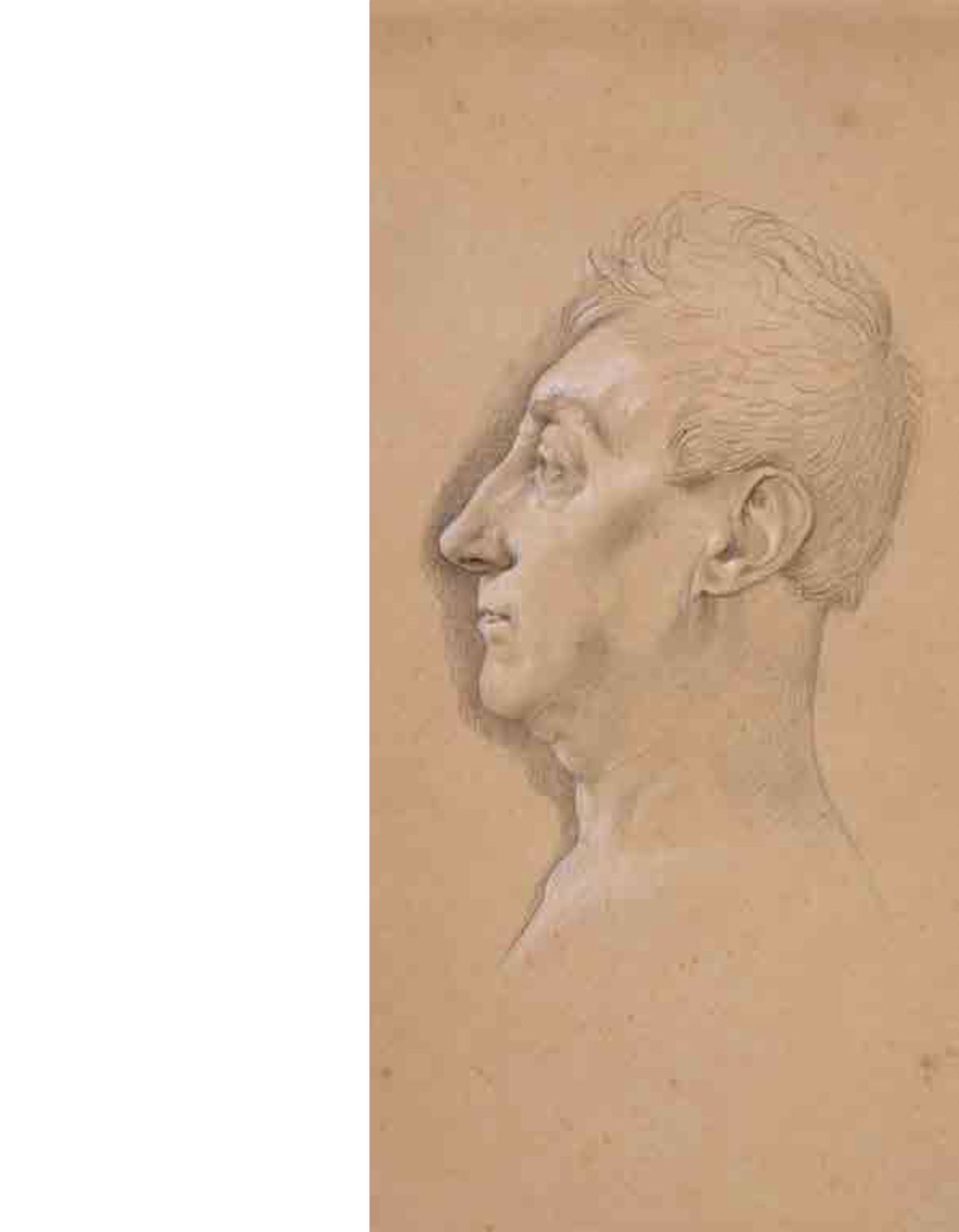
Portrait de Lafayette
par Jean-Auguste-Dominique Ingres. Bayonne, musée Bonnat.
©RMN-Grand Palais / René-Gabriel Ojéda