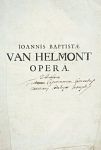
HELMONT, Jean Baptiste van. Ortus Medicinae, id est initia Physicae inaudita. Lyon, Joan Ant. Huguetan & Guillielmi Barbier, 1667.
Estimation :
Start Price 500 € /
Description
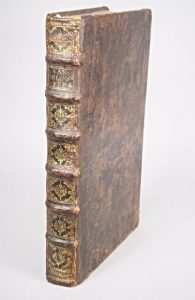
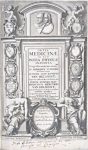
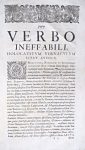
4to wide, mm. 355x225; Contemporary full marbled binding, spine enhanced in gold, tagli sprayed edges; pp. 24 nn., incl. Halftitle and Titl., 487, 192, [58], 1 leaf bl. Text on two columns, •Pictorial Titlepage with the portrait of the Author and the Editor, allegories and devices around the Title; illustrated edition and Finals. Note of possesion in Latin and in French at the Titlepage. Removing the name Jehovah from the text of the preface.
FIRST PRINTED EDITION IN FRANCE. The entire chemical and alchemical work of Van Helmont, a prominent disciple of Paracelsus, is collected by his son Franz Merkurius.
PMM: “Many of Hemont's general principles were derived from those of his master, Paracelsus . Although he was inclined to mysticism, he nevertheless became a remarkable scientific investigator and made significant contributions to the progress of chemistry and medicine…he believed that the processes in diseased organs are of a chemical nature, due in each case to the action of a specific ferment, and he gave a new impetus to the application of chemical remedies to diseases…In medicine, he introduced the examination of the specific gravity of urine for diagnostic purposes… Helmont's significance in the development of chemistry is perhaps even greater; he was the first to use the term 'gas' (derived from the Greek work 'chaos').
Helmont, who was himself an alchemist, marks the transition from alchemy to chemistry in the modern sense, and it is not surprising to find that he was much studied by Robert Boyle who adopted many of his ideas. Hemont therefore stands at the very beginning of the chemical revolution which was completed by Lavoisier in the eighteenth century.” Garrison-Morton: “H. was one of the founders of biochemistry [and] the first to realize the physiological importance of ferment and gases.” Esemplare proveniente dalla Biblioteca dei Cappuccini di Nancy, con la scritta, nel margine inferiore del frontespizio: De la Bibliothèque des Capucins de Nancy, Inscript au Catalogue.
P.M.M., n. 1355; Garrison-Morton, 665; Hirsch, III, 153.
Slight sign of wear, unsophisticated copy.
FIRST PRINTED EDITION IN FRANCE. The entire chemical and alchemical work of Van Helmont, a prominent disciple of Paracelsus, is collected by his son Franz Merkurius.
PMM: “Many of Hemont's general principles were derived from those of his master, Paracelsus . Although he was inclined to mysticism, he nevertheless became a remarkable scientific investigator and made significant contributions to the progress of chemistry and medicine…he believed that the processes in diseased organs are of a chemical nature, due in each case to the action of a specific ferment, and he gave a new impetus to the application of chemical remedies to diseases…In medicine, he introduced the examination of the specific gravity of urine for diagnostic purposes… Helmont's significance in the development of chemistry is perhaps even greater; he was the first to use the term 'gas' (derived from the Greek work 'chaos').
Helmont, who was himself an alchemist, marks the transition from alchemy to chemistry in the modern sense, and it is not surprising to find that he was much studied by Robert Boyle who adopted many of his ideas. Hemont therefore stands at the very beginning of the chemical revolution which was completed by Lavoisier in the eighteenth century.” Garrison-Morton: “H. was one of the founders of biochemistry [and] the first to realize the physiological importance of ferment and gases.” Esemplare proveniente dalla Biblioteca dei Cappuccini di Nancy, con la scritta, nel margine inferiore del frontespizio: De la Bibliothèque des Capucins de Nancy, Inscript au Catalogue.
P.M.M., n. 1355; Garrison-Morton, 665; Hirsch, III, 153.
Slight sign of wear, unsophisticated copy.