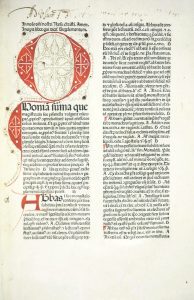
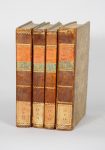
HUYGENS, Christian. Opera Varia. Volumen Primum [- Secundum]. Lugduni Batavorum [Leyden], apud Ianssonios Vander Aa, 1724. [follow:] Opera Reliqua Volumen Primum [-Secundum]. Amstelodami, apud Janssonio-Waesbergios, 1728 [Segue:] Opuscula Posthuma...
Estimation :
Start Price 4 000 €
Description
Tomus Primus [-Secundus]Amstelodami, apud Janssonio-Waesbergios, 1728•
6 Parts in 4 Vols. 4to, mm. 250x200; Contemporary half calf binding, gilded tles on labels at the spine. Vol. I, Opera Varia; pp. 16 nn.incl. Titl. with copper vignette, [1-4],-5-308,
PORTRAIT OF HUYGENS engraved by F. OTTENS, 33 copper plates, all out text; V. 2, Opera Varia: pp. 10 nn., incl. Titl. with copper vignette, 316-520, [4], 523-722, [4], 725-776, [18 with Index and Catalogus Jansonnius], 2 nn. ‘Admonitio bibliopegis, plates out text numbered 34 - 56; V. 3, Opera Reliqua: pp. 10 incl. Titl., [24], 315, 1 bianca, 15 plates out text; V. 4, Opuscula posthuma:
Tomus primus: pp. 20 nn. incl. Titlepage, 1-202 [2] 205-226, 21 plates out text, numbered I-XIX, I-III.
Tomus secundus, pp. 2 nn. with Titlepage, [2], 3--72 [2] 75-104 [2] 107-134 [2] 157-184, 21 plates out text, numbered VIII, 5, 4, 4.
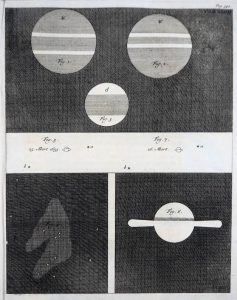
A total of 114 copper plates out text. Stamp of extinct library on Titlepages.
RARE SET OF THE WORKS OF HUYGENS, Opera and Opera Varia reliqua first collective edition. Important edition edited by W. G. Gravesande, which pressed several introductory notes: Opera Varia contains, in the first volume, the Opera Mechanica, including the famous Horologium Oscillatorium, and, in the second volume, the Opera Geometric; the two volumes of the Opera reliqua contain substantial studies on the diopter, percussion, centrifugal force, gravity, light, telescope, and much more.Roberts & Trent: “Huygens made major contributions to geometry, including work on the rectification of the parabola and his studies of cissoid and cycloid curves. In mechanics, he studied hydrostatics, elastic collision, oscillation, and the theory of light. However, he is best known for his observations of 1658 that a pendulum could repeatedly swing in exactly the same amount of time if the arc it swung through were not circular: this observation led to his invention of the pendulum clock.” Questa edizione è assai stimata e ricercata. Albert van Helden: “‘s Gravesande was a generalist who made few original contributions to science, yet he was perhaps the most famous scientist in Europe. … He was also immensely productive. Under his care two editions of Christiaan Huygens’s theretofore unpublished works were prepared, Opera Varia in 1724 and Opera Reliqua in 1728.” Zeitlinger, I, nn. 2058, 2060, 2061; Houzeau & Lancaster 3428; Roberts & Trent, 170; Albert van Helden, A History of Science in The Netherlands, 1999, pp. 450-453.
Sligh sign of wear at the binding, sporadic marginal foxing, but fine specimen with wide margins.Il lotto viene venduto provvisto di licenza d'esportazione/The lot is offered with a valid export licence.
6 Parts in 4 Vols. 4to, mm. 250x200; Contemporary half calf binding, gilded tles on labels at the spine. Vol. I, Opera Varia; pp. 16 nn.incl. Titl. with copper vignette, [1-4],-5-308,
PORTRAIT OF HUYGENS engraved by F. OTTENS, 33 copper plates, all out text; V. 2, Opera Varia: pp. 10 nn., incl. Titl. with copper vignette, 316-520, [4], 523-722, [4], 725-776, [18 with Index and Catalogus Jansonnius], 2 nn. ‘Admonitio bibliopegis, plates out text numbered 34 - 56; V. 3, Opera Reliqua: pp. 10 incl. Titl., [24], 315, 1 bianca, 15 plates out text; V. 4, Opuscula posthuma:
Tomus primus: pp. 20 nn. incl. Titlepage, 1-202 [2] 205-226, 21 plates out text, numbered I-XIX, I-III.
Tomus secundus, pp. 2 nn. with Titlepage, [2], 3--72 [2] 75-104 [2] 107-134 [2] 157-184, 21 plates out text, numbered VIII, 5, 4, 4.
A total of 114 copper plates out text. Stamp of extinct library on Titlepages.
RARE SET OF THE WORKS OF HUYGENS, Opera and Opera Varia reliqua first collective edition. Important edition edited by W. G. Gravesande, which pressed several introductory notes: Opera Varia contains, in the first volume, the Opera Mechanica, including the famous Horologium Oscillatorium, and, in the second volume, the Opera Geometric; the two volumes of the Opera reliqua contain substantial studies on the diopter, percussion, centrifugal force, gravity, light, telescope, and much more.Roberts & Trent: “Huygens made major contributions to geometry, including work on the rectification of the parabola and his studies of cissoid and cycloid curves. In mechanics, he studied hydrostatics, elastic collision, oscillation, and the theory of light. However, he is best known for his observations of 1658 that a pendulum could repeatedly swing in exactly the same amount of time if the arc it swung through were not circular: this observation led to his invention of the pendulum clock.” Questa edizione è assai stimata e ricercata. Albert van Helden: “‘s Gravesande was a generalist who made few original contributions to science, yet he was perhaps the most famous scientist in Europe. … He was also immensely productive. Under his care two editions of Christiaan Huygens’s theretofore unpublished works were prepared, Opera Varia in 1724 and Opera Reliqua in 1728.” Zeitlinger, I, nn. 2058, 2060, 2061; Houzeau & Lancaster 3428; Roberts & Trent, 170; Albert van Helden, A History of Science in The Netherlands, 1999, pp. 450-453.
Sligh sign of wear at the binding, sporadic marginal foxing, but fine specimen with wide margins.Il lotto viene venduto provvisto di licenza d'esportazione/The lot is offered with a valid export licence.